
The Cottage Buyer's Checklist: Septic, Well and Shoreline
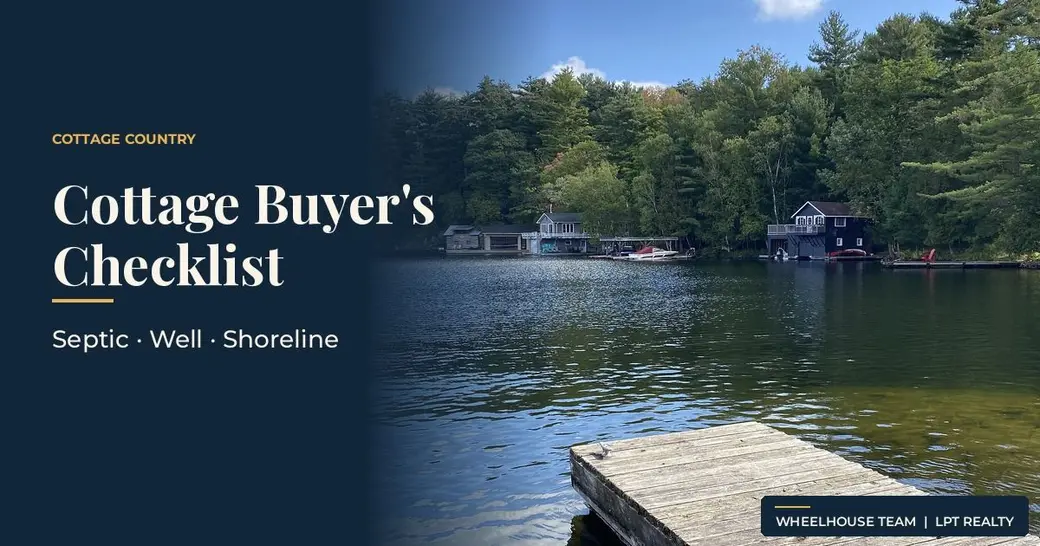
Picture it: morning coffee on the dock, loons on the water, nowhere to be. Now picture finding out in July that the septic bed is failing. A cottage is a lifestyle purchase, but it is also a small private utility company. You are the water department, the sewage plant and the shoreline crew. Here is a practical checklist for buyers looking around Lake Simcoe, Lake Couchiching, Ramara, Brock, Georgina and Orillia.
1. Septic: the system nobody sees until it fails
Most rural and waterfront properties are not on municipal sewers, so they rely on an on-site septic system. In Ontario, systems of this size are regulated under Part 8 of the Ontario Building Code, and permits and inspections are handled locally by the municipality or health unit.
Before you firm up an offer, ask for:
- Permit and installation records. Ask the seller and the local building department what is on file: installation year, system type and tank size.
- Pump-out history. Receipts tell you whether the system has been maintained.
- A septic inspection by a qualified professional. A home inspector may only look at the surface. A septic contractor can pump and inspect the tank and assess the leaching bed.
- Bedroom count vs. system size. If you plan to add bedrooms or a bunkie, the system may need upgrading. Check with the municipality first.
2. Well water: test it, then test it again
Clear, great-tasting water can still contain bacteria. Public Health Ontario offers free testing of private drinking water for E. coli and total coliforms. You pick up a kit from your local public health unit or a designated location, take the sample from an indoor cold tap and get it to a drop-off within 48 hours. Results are usually ready online in 2 to 4 business days.
Two things buyers often miss:
- The free test only covers bacteria. It does not test for chemicals or minerals. For those, Ontario points you to a licensed laboratory.
- Some cottages draw from the lake. Treated lake water is also a private system. Find out exactly what treatment equipment is installed (UV, filters) and whether it works.
Ask about well type, depth and flow if records exist. Make your offer conditional on satisfactory water quality and quantity.
3. Shoreline: what you can (and can't) change
The shoreline is often why you are buying, and it is also the most regulated part of the property. Around Lake Simcoe, the Lake Simcoe Protection Act and the Lake Simcoe Region Conservation Authority (LSRCA) play a big role in what you can build or alter near the water. In other areas, the local conservation authority and the municipality set the rules.
Questions to ask:
- Was the dock, boathouse or shoreline wall permitted? Unpermitted work can become your problem.
- Is the property in a regulated area or floodplain? The conservation authority can tell you.
- Do you own right to the water? Some waterfront lots have a shore road allowance between the lot and the lake. Your lawyer can confirm this on title.
- What are your future plans? If you dream of a new boathouse or a bigger deck, talk to the municipality and conservation authority before you buy.
4. Access, roads and seasons
- Year-round or seasonal road? Private or seasonal roads may not be plowed. Ask who maintains the road and how costs are shared.
- Water access only? Plan for boats, parking and winter logistics.
- Heating and winterizing. Is the cottage insulated and heated for winter use, or seasonal only? This affects insurance and financing too.
5. Insurance and financing
Lenders and insurers can treat cottages differently from a city home, especially seasonal properties, wood stoves, older wiring or water-access lots. Call your insurer and lender before you firm up. Ask what they need: wood-stove (WETT) inspections, electrical updates or proof of year-round access.
6. The fun part: test-drive the lifestyle
Visit on a summer weekend and a weekday. Check boat traffic, cell signal and internet options, and the drive time to groceries. Stand on the dock at sunset. You will know.
Quick printable checklist
- Septic records, pump-out receipts, septic inspection
- Well water bacteria test (free from Public Health Ontario) and chemical test if needed
- Water treatment equipment working
- Shoreline structures permitted; conservation authority check
- Shore road allowance and title reviewed by your lawyer
- Road access and winter maintenance confirmed
- Insurance and financing confirmed before you firm up
FAQ
Is well water testing free in Ontario? Yes, for bacteria. Public Health Ontario tests private drinking water for E. coli and total coliforms at no charge. Chemical testing goes through a licensed lab.
Who regulates septic systems in Ontario? Septic systems are covered by Part 8 of the Ontario Building Code. Permits and inspections are handled locally by the municipality or health unit.
Can I build a new dock or boathouse on Lake Simcoe? Possibly, but check first. Work near the shoreline may need approval from the municipality and the Lake Simcoe Region Conservation Authority.
Should my offer be conditional on a septic and water inspection? Talk to your REALTOR® and lawyer, but for rural and waterfront properties, those conditions are common and smart.
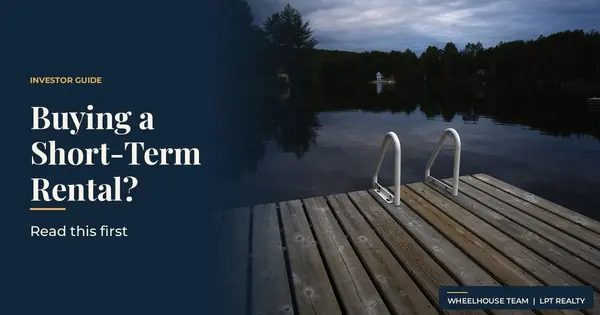
Photo credit: “Muskoka Homes” by WabbitWanderer via Wikimedia Commons, CC BY-SA 2.0. Image cropped and text added.
Thinking about a move around Lake Simcoe?
If this sparked a question about a property, a town or an investment idea, I would be happy to talk it through, no pressure.
Erik Jacobsen, REALTOR® | Wheelhouse Team | LPT Realty, Brokerage
Phone: 647-557-2078 · Email: erik@realestatewheelhouse.com
Not legal, engineering or financial advice. Confirm rules with your municipality, conservation authority, lawyer and inspector.
Categories
Recent Posts